Homeowners are putting money into the parts of a property that buyers notice first. In fact, 97% of realtors say curb appeal is important for attracting a buyer. Additionally, 92% have suggested sellers improve curb appeal before listing.
Decorative fence toppers and post caps elevate curb appeal quickly because they sharpen the fence line, add architectural style, and protect vulnerable materials.
By upgrading the top line and the post finish, you can make the entire perimeter look more intentional and visually appealing.
WHAT'S IN THIS GUIDE
QUICK FACTS
Toppers upgrade curb appeal fast by refining the fence line.
Post caps add a finished look and protect post tops from weather.
Pick materials that hold up to moisture and freeze-thaw cycles.
Match the style to your home so it looks built-in, not tacked on.
Check local rules and fence stability before adding height.
What Are Decorative Fence Toppers and Post Caps?
Decorative Fence Toppers
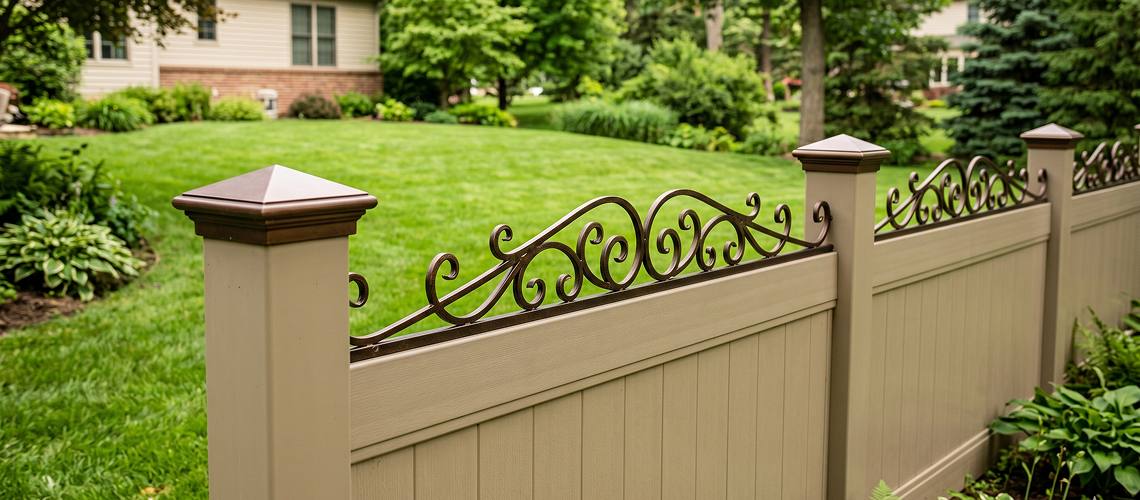
Decorative fence toppers are panels or design elements attached along the top of a fence section. Depending on the style, they can:
- Add visual height and definition
- Increase partial privacy without fully closing in the yard
- Create a more intentional, “built-in” look rather than a plain fence run
Common examples include lattice toppers, arched topper panels, and ornamental accents that echo the home’s architecture.
Fence Post Caps
Fence post caps sit on top of each post, creating a clean, finished endpoint. They are also one of the most practical fence upgrades you can make because post tops are a weak point for moisture intrusion.
Popular Types of Decorative Fence Toppers
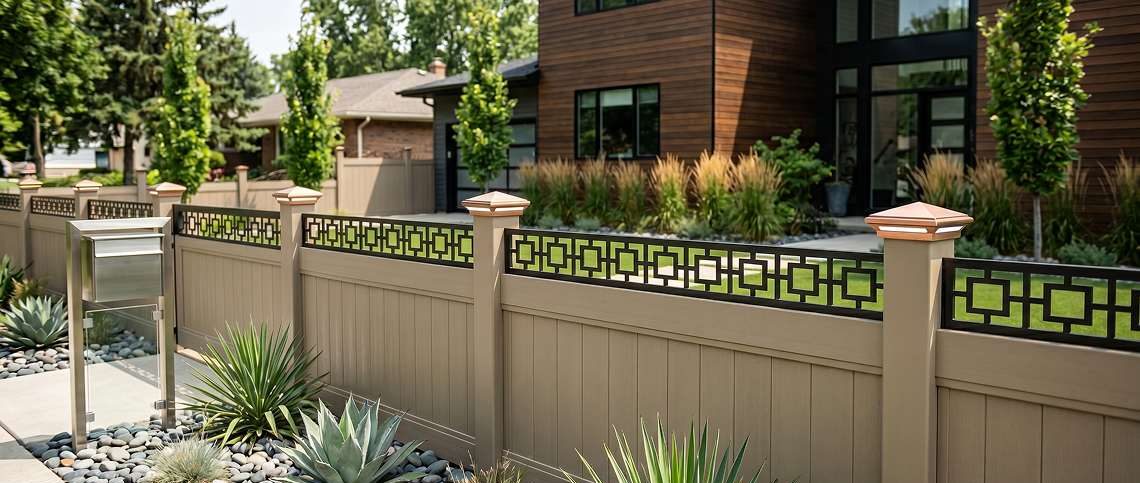
Lattice Toppers
A classic topper that adds visual interest while still letting light and air through. Lattice is especially common on wood and vinyl privacy fences when homeowners want a softer, more finished top edge.
Best For
- Backyards where you want added privacy without fully blocking airflow
- Gardens and patio borders where you want a decorative, lighter look
- Traditional and coastal-inspired home styles
Look
- Clean geometric pattern (square or diagonal) that reads “finished” from the street
- Visually lighter than solid extensions
- Can be framed to match rails and posts for a built-in feel
Spindle or Picket-Style Toppers
These toppers add vertical detail above the top rail, often mirroring porch railings or traditional picket shapes. They can make a fence feel taller and more architectural without turning it into a solid wall.
Best For
- Traditional homes (Colonial, Cape Cod, farmhouse)
- Front or side yards where the fence is part of the home’s overall curb appeal
- Homeowners who want decorative detail more than added privacy
Look
- Vertical elements that create rhythm and structure
- A refined, “crafted” appearance, especially when paired with matching gates
- More open than privacy extensions while still adding presence
Arched Topper Panels
Arched toppers create a gentle curve across each section, which adds movement and a high-end, custom feel. They are often chosen to soften long, straight fence runs.
Best For
- Homes with curved landscaping lines or formal garden layouts
- Fence lines that feel too rigid or “boxy” as-is
- Creating a focal point near entry gates or walkways
Look
- Smooth, elevated profile that stands out without needing ornate details
- More upscale than a flat top line
- Can be subtle or dramatic, depending on arch height
Scalloped Topper Panels
Scalloped toppers use a repeating curve pattern, typically dipping between posts. This style adds charm and is common in neighborhoods where homeowners want a traditional but decorative upgrade.
Best For
- Classic neighborhood homes where a friendly, approachable look fits best
- Backyards and side yards where you want design detail without sharp lines
- Pairing with decorative post caps for a complete “finished” look
Look
- Repeating wave-like pattern that feels traditional and intentional
- Softer than straight-line fences
- Works well with picket and semi-privacy fence designs
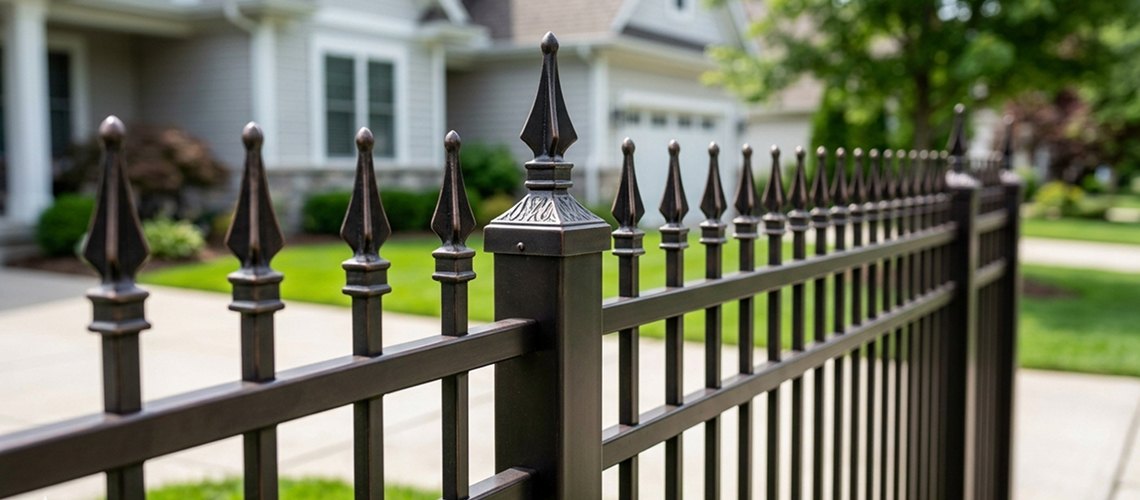
Ornamental Metal Accent Toppers
These are decorative metal elements added to the top edge of the fence, often used to introduce a more upscale style. Depending on design, they can be subtle (simple accents) or bold (decorative finials).
Best For
- Homeowners who want a more premium, security-forward aesthetic
- Modern or transitional exteriors
- Matching metal gates or highlighting entry points
Look
- Clean, crisp lines that add contrast
- Can include finials, scrollwork, or minimalist accents
- Often creates a higher-end first impression with minimal added bulk
Privacy Extension Toppers
Privacy extensions are functional toppers designed to increase screening above the fence line. They are typically more solid than decorative toppers and are used to block sightlines rather than simply add style.
Best For
- Properties with close neighbors or elevated sightlines
- Backyards where privacy is the main goal
- Upgrading an existing fence without replacing full panels
Look
- Taller, more structured profile that reads modern and purposeful
- Less decorative, more privacy-focused
- Can be blended with design details (framing, trim) to avoid a “boxed-in” feel
Popular Fence Post Cap Styles and Materials

Wood Post Caps
Wood caps are a natural match for wood fences and can be cut, shaped, and finished to blend in or stand out. They are often chosen when homeowners want a cohesive, custom-built look.
Best For
- Cedar, pine, or pressure-treated wood fences
- Homeowners who want a seamless, stained or painted finish
- Traditional and rustic exterior styles
Look
- Warm, natural appearance that blends with wood grain
- Can be simple (flat or pyramid) or custom-milled for detail
- Matches well with wood trim boards and decorative toppers
Vinyl Post Caps
Vinyl caps are designed to fit vinyl fence posts precisely and are popular for their low-maintenance performance. They typically snap or press into place, creating a clean, uniform finish.
Best For
- Vinyl privacy fences and vinyl picket fences
- Homeowners who want minimal upkeep and consistent color
- Neighborhoods where a clean, uniform exterior look is preferred
Look
- Smooth, bright finish with crisp edges
- Uniform appearance across the entire fence line
- Common shapes include pyramid, flat, and decorative finial styles
Aluminum and Other Metal Post Caps
Metal caps, especially aluminum, are chosen for durability and a sharper, more modern finish. They can also complement aluminum fences or mixed-material designs.
Best For
- Aluminum fencing systems and modern-style properties
- Areas with heavy weather exposure where durability matters
- Homeowners who want a crisp, refined top-of-post detail
Look
- Clean, structured lines that read upscale and intentional
- Typically slimmer and more precise-looking than wood caps
- Often paired with matching gates and metal accents for consistency
Copper Post Caps
Copper caps are a premium option known for their distinctive appearance and natural aging process. Over time, copper develops a patina that changes its color and character.
Best For
- High-visibility fences (front yard, entry gate posts, driveway gates)
- Traditional homes where classic materials fit the architecture
- Homeowners who want a standout detail that matures over time
Look
- Rich, warm tone when new
- Gradual patina that becomes darker and can shift toward greenish tones
- Often used as an accent feature to elevate curb appeal immediately
Solar Post Caps
Solar caps combine the finish of a post cap with added lighting. They can improve visibility and make entry points, walkways, and fence lines look more polished at night.
Best For
- Gates, walkways, patios, and driveway-adjacent fencing
- Homeowners who want subtle lighting without hardwiring
- Improving nighttime safety and navigation
Look
- Clean cap profile with integrated light lens
- Adds an upgraded, “designed” look after dark
- Works especially well when used consistently along a visible run
Cap Shapes: Flat, Pyramid, Ball-Top, and Finials
Shape affects both style and how well a cap sheds water. Even within the same material, the shape can change the overall feel of the fence.
Best For
- Flat caps: Modern designs and clean-lined fences
- Pyramid (sloped) caps: Wood posts and wet climates where water shedding is a priority
- Ball-top caps: Classic picket fences and traditional landscaping
- Finials: Decorative fences where ornamental detail is part of the look
Look
- Flat: Minimal, modern, understated
- Pyramid: Traditional, functional, and “finished” from the street
- Ball-top: Classic, decorative, and neighborhood-friendly
- Finials: More ornate, often used to create a premium or formal exterior style
How To Choose the Right Fence Toppers and Post Caps
Step 1: Identify Your Fence Material and Profile
Match topper and cap systems to what you already have:
- Wood fences: Focus on water management and sealing
- Vinyl fences: Use manufacturer-compatible sizes and attachment methods
- Aluminum fences: Prioritize powder-coated, outdoor-rated hardware
Step 2: Decide What You Want the Upgrade To Do
Be specific. Are you trying to:
- Add curb appeal for a cleaner street view?
- Increase privacy only where you need it?
- Make the fence feel taller without a full rebuild?
- Improve durability at post tops?
Step 3: Confirm Local Rules Before Adding Height
Fence height is commonly regulated at the municipal level and sometimes by HOAs. Before choosing a topper that increases total height, confirm:
- Maximum height for front yard vs. backyard
- Corner-lot visibility rules (often called “sight triangle” requirements)
- Any neighborhood restrictions
Step 4: Choose a Realistic Maintenance Level
- Prefer minimal upkeep: Vinyl or aluminum caps, simple topper materials
- Comfortable with periodic upkeep: Stained wood caps and custom toppers can be worth it, but plan for sealing and inspections
Frequently Asked Questions (FAQs)
Do post caps actually prevent wood fence posts from rotting?
They help reduce moisture exposure at the post top, which can slow rot, but they are not a guarantee. Rot risk also depends on drainage, soil contact, and how the fence is maintained.
What size post cap do I need (4x4, 5x5, 6x6)?
Match the cap to the actual measured post size and the fence system. “Nominal” wood sizes can differ from true dimensions, and vinyl systems use manufacturer-specific profiles.
Can I mix materials, like metal post caps on a wood fence?
Yes. Mixed materials can look intentional when the finish complements other exterior elements (railings, fixtures, hardware). Use outdoor-rated fasteners to avoid corrosion issues.
Will decorative toppers make my fence less stable in wind?
They can, because added height increases wind exposure. If your fence already has leaning posts or loose rails, reinforce or repair before adding height.
What is the most low-maintenance option that still looks high-end?
For many homeowners, that’s vinyl or aluminum post caps paired with a simple, clean topper style (or no topper) for a crisp, finished fence line with minimal upkeep.
Upgrade Your Fence With Expert Craftsmanship
If you want decorative fence toppers or post caps that enhance curb appeal without compromising structural integrity, Connecticut Fence & Gate in Litchfield County brings the experience and attention to detail needed to get it right.
Our team understands local conditions, architectural styles, and the importance of precision installation.