
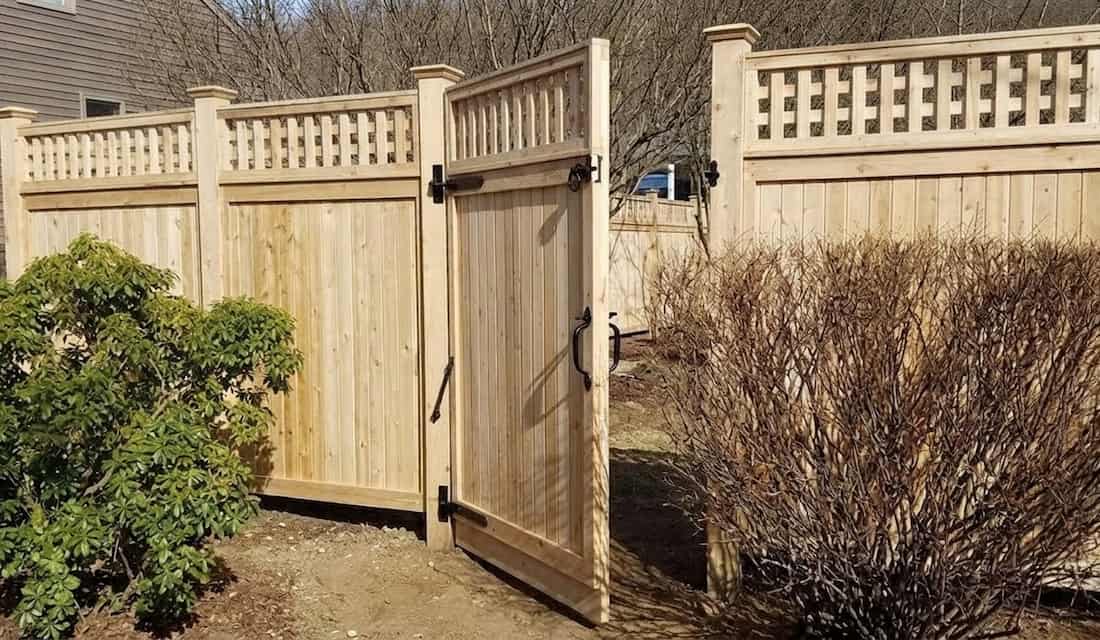
Spending a summer evening on your back patio only to feel like you're sitting in your neighbor's yard is one of those experiences that answers the question for you.
But for homeowners in Litchfield County still on the fence about the investment, the decision runs deeper than blocking a sightline. It comes down to long-term property value, how you actually use your outdoor space, and whether the structure will hold up against a New England climate that tests everything it touches.
Here is what this actually costs, what materials make sense for this region, and how to figure out if a backyard privacy fence is the right move for your specific property.
What's In This Guide
Quick Facts
- Installed privacy fencing costs $20 to $130 per linear foot.
- Typical backyard projects run $3,000 to $26,000+.
- Rocky terrain and winters make installation quality important.
- Vinyl is low-maintenance; cedar is a strong wood choice.
- Check local permits, setbacks, and zoning first.
What a Privacy Fence Actually Is and What It Is Not
A privacy fence is any fence built to significantly block or eliminate visibility into your yard from the outside. In most residential installations, that means a solid panel fence standing six feet tall, though some homeowners pursue taller structures where local zoning permits it.
What it is not: a maintenance-free solution, a guaranteed HOA approval, or a one-size-fits-all product.
Litchfield County covers municipalities including Torrington, Litchfield Borough, New Milford, Winsted, and Canaan, each with its own zoning rules around fence height, setback requirements, and permit thresholds. A call to your local zoning office before installation is not optional. It is the first step.
Privacy Fence Cost in Connecticut: What to Actually Expect
The most common question homeowners search before committing to a project is how much for a privacy fence, and the real answer depends on material, linear footage, terrain, and labor.
Connecticut is not a cheap market for outdoor construction, and Litchfield County's rocky soil and rolling terrain add variables that affect both installation time and material requirements.
Here is a general cost breakdown for a standard 6-foot privacy fence, installed, in Connecticut:
| Material | Avg. Cost Per Linear Foot (Installed) |
| Wood (pine or cedar) | $20 – $50 |
| Vinyl | $40 – $60 |
| Composite | $55 – $85 |
| Aluminum with privacy slats | $75 – $130 |
For a typical backyard enclosure of 150 to 200 linear feet, Litchfield County homeowners can expect a total outdoor privacy fence investment of $3,000 to $26,000 or more, depending on material choice and site conditions. Sloped yards, ledge rock, permit fees, and gate additions all push the number higher.
Fencing can support buyer appeal when it improves privacy, usability, curb appeal, and property boundaries, but resale value depends on the fence's condition, material, placement, and fit with the property.
For properties in Litchfield County, where lot sizes are generous and outdoor living carries real weight, a properly installed privacy fence does more than block views. It defines usable space in a way that directly affects how the property functions day to day.
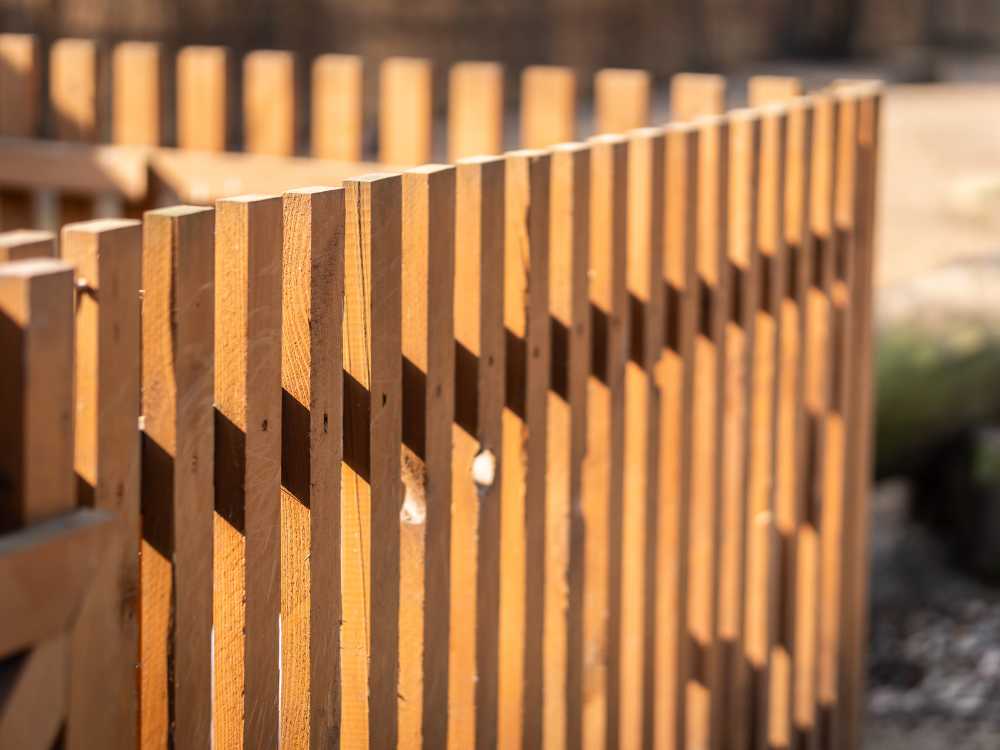
Why Litchfield County Properties Have Specific Fencing Demands
Litchfield County is not suburban Connecticut. The landscape is rural and semi-rural, characterized by wooded lots, rocky terrain, historic architecture, and a region that has distinct needs compared to coastal or metro Connecticut towns.
Terrain and Soil Conditions
Rocky, uneven ground is common across the Litchfield Hills, which affects post-setting depth and the equipment required to do the job correctly. Contractors unfamiliar with this terrain can make structural errors at the installation stage that show up a season or two later.
Wind Load and Seasonal Stress
A 6-foot solid privacy fence behaves like a sail in the wind. Add ice accumulation, heavy snowfall, and the freeze-thaw cycles that define Connecticut winters, and the structural requirements for posts and panel connections become non-negotiable. Proper post depth and panel construction are not upgrades. They are baseline requirements for a fence that will last.
Wildlife and Boundary Definition
Deer pressure in Litchfield County is significant. A standard privacy fence will not stop a deer from jumping, but it does define property lines, deter casual intrusion, and protect landscaped areas near the house from casual browsing damage.
Aesthetic Compatibility
Historic districts and HOA-governed communities throughout the county have design standards that favor natural materials and traditional styles. Cedar wood and wood-grain vinyl tend to fit the architectural character of the region far better than high-gloss white panel systems.
How To Decide if a Privacy Fence Is Right for Your Property
A privacy fence is worth considering when it solves a real problem on the property. Before asking for quotes, homeowners should narrow the goal, location, and material.
Step 1: Define Your Primary Goal
Are you blocking a neighbor's sightline, containing children or pets, reducing road noise, or simply creating a defined outdoor living area? Your goal shapes the fence height, material, and placement, and determines whether you need a full enclosure or just a strategic partial run.
Step 2: Walk Your Property Line
Physically walk the perimeter and identify where you actually need coverage. A large rural lot may only require 80 linear feet of privacy fencing around a patio or pool, not a full enclosure. Reducing scope meaningfully reduces cost.
Step 3: Confirm Local Zoning Requirements
Contact your town's zoning or building department to verify maximum fence height, required setbacks from property lines, and permit requirements. In Connecticut, permits are commonly required for fences exceeding 6 feet, and corner lot rules vary by municipality. This step protects your investment from the start.
Step 4: Match the Material to the Climate
For Litchfield County's climate, pressure-treated wood, cedar, and vinyl are the most practical choices for an outdoor privacy fence. Cedar resists moisture and decay naturally without chemical treatment, making it a premium wood option for this region. Vinyl requires minimal maintenance and can handle freeze-thaw cycles well when the material quality and installation are appropriate. Composite materials offer durability but come at a higher upfront cost.
Step 5: Get Detailed, Written Quotes
Pricing varies considerably between contractors. A reliable quote should specify post depth, panel construction, hardware specs, and how sloped terrain will be addressed through racked or stepped installation. Ballpark pricing given without a property walkthrough is not a reliable basis for budgeting.
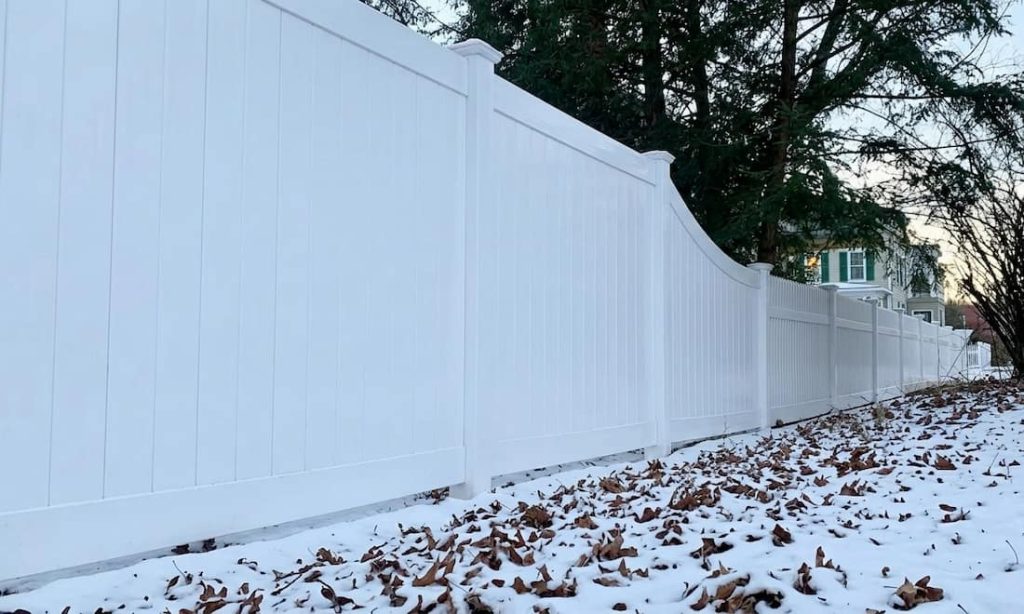
Wood vs. Vinyl: The Two Most Common Privacy Fence Materials in Connecticut
These two materials account for the majority of residential backyard privacy fence installations across Connecticut, and both have genuine strengths worth understanding before deciding.
Wood Fencing
Wood is a strong choice when the property calls for a natural, traditional look. It works especially well for wooded lots, older homes, and rural settings.
- Lower upfront cost compared to vinyl or composite
- Easily customized in height, style, and finish
- Can be stained or painted to match the home's exterior
- Requires maintenance every one to two years, including sealing, staining, and post-inspection
- Susceptible to rot and moisture damage if not properly treated or if ground contact is poorly managed
Cedar is a strong natural wood option for this climate. It resists moisture and insect damage without chemical additives, and it ages into a silver-gray tone that works well in wooded or rural settings.
Vinyl Fencing
Vinyl usually costs more upfront, but it reduces long-term maintenance. It is a practical choice for homeowners who want a clean privacy fence without staining or painting.
- Does not rot, warp, crack, or splinter
- Holds color without repainting
- Easy to clean with basic hosing
- Less flexible for custom sizing or unique design requirements
- Lower-grade vinyl products can become brittle in extreme cold, so material quality matters considerably
For homeowners who want a low-maintenance outdoor privacy fence that performs through Connecticut winters without annual upkeep, vinyl is often the practical answer. For those who prefer a natural, traditional look and are comfortable with the maintenance commitment, cedar delivers strong long-term performance in this region.
➤ MORE ON THIS TOPIC: 11 Privacy Fence Ideas You'll Want to Copy ASAP
Does a Privacy Fence Add Value to Your Property?
This question matters because it shapes how you think about return on investment, not just the immediate privacy fence cost.
A well-installed backyard privacy fence contributes to property value in several concrete ways. Defined outdoor living spaces rank among the most requested features in residential design and consistently influence buyer interest.
Beyond curb appeal, privacy fencing around a pool, patio, or play area signals a functional, move-in-ready outdoor space. Buyers with children or pets respond to this. Properties with enclosed yards photograph better, show better, and create an immediate sense of livability that open lots do not.
The flip side is equally true. A failing fence with rotting posts, leaning panels, or mismatched patch repairs can actively work against a sale. The value is not in simply having a fence. It is in having one that is installed correctly and maintained properly.
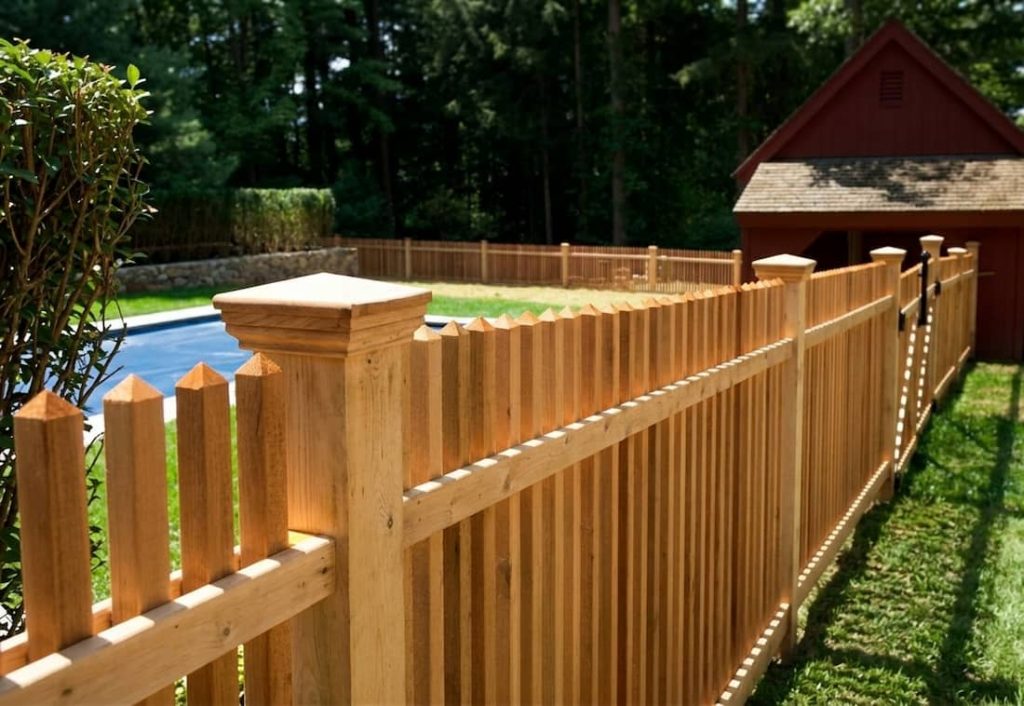
Frequently Asked Questions (FAQs)
Can I install a privacy fence on a shared property line with my neighbor in Connecticut?
Yes, but it is best to get written agreement from both property owners before work begins. If the fence sits directly on the property line, both neighbors may share responsibility for maintenance and costs. A licensed surveyor can confirm the boundary before installation and help prevent disputes.
How long does a privacy fence typically last in New England?
It depends on the material and installation quality. Cedar and pressure-treated pine fences often last around 15 to 20 years with regular upkeep, while high-quality vinyl can last 20 to 30 years or more. Proper post depth is especially important in New England because freeze-thaw cycles can shorten a fence's lifespan.
Are there any HOA restrictions specific to Litchfield County that affect privacy fence approval?
HOA rules vary by community, especially in historic districts, planned developments, and lakefront areas. Common restrictions include fence height, material, color, and gate placement. Homeowners should review HOA guidelines and get approval before signing a contractor agreement.
What happens to a privacy fence during Connecticut's freeze-thaw cycles if posts are not set deep enough?
If posts are too shallow, freeze-thaw movement can push them upward or shift them out of alignment. This is called frost heave, and it can cause a fence to lean, loosen, or fail prematurely. In Connecticut, quotes should specify proper post depth to help prevent this issue.
Is a code-compliant fence or barrier required for pool installations in Connecticut?
Yes. Connecticut residential pools generally need secure enclosures that limit unsupervised access. Requirements often include minimum fence height, self-latching gates, and limits on gaps or climbable openings. Pool fencing must meet state code and local ordinances, and permits are typically required.
Ready to Start Your Litchfield County Fence Project?
If a backyard privacy fence is on your list for this year, the right contractor makes all the difference between a structure that lasts and one that leans by year three.
Connecticut Fence & Gate serves Litchfield County with the regional knowledge, material expertise, and installation standards that this type of terrain and climate actually demand.
Reach out today