
What's In This Guide
- What Fence Material Holds Up Best in Connecticut Weather?
- Wood Fencing
- Vinyl Fencing
- Aluminum Fencing
- Chain-Link Fencing
- Composite Fencing
- How to Choose the Right Fence Material for Your Property
- What Affects Fence Material and Installation Costs?
- When Should You Call a Professional Fence Contractor?
- Frequently Asked Questions
- Ready to Choose the Right Fence Material for Your Connecticut Property?
Connecticut homeowners searching for fence supply near them are often trying to solve a specific problem: their existing fence has leaned, cracked, or rotted, and they need a replacement that will last. Comparing products in a home improvement store may help narrow the options, but it cannot determine which material is best suited to a particular property. Fence performance in Litchfield County also depends on soil conditions, wind exposure, moisture levels, post depth, and installation quality.
Quick Facts
- Freeze-thaw cycles are a major test for Connecticut fences. The ground expands and contracts as it repeatedly freezes and thaws, making proper post depth and footing construction essential to long-term performance, regardless of the fencing material selected.
- Cedar and pressure-treated pine are among the more moisture-resistant options, but only pressure-treated lumber rated for ground contact should touch the soil line.
- Vinyl can perform well in cold climates when it is manufactured with appropriate wall thickness, impact modifiers, and a formulation designed for low temperatures.
- Aluminum and galvanized or vinyl-coated chain link offer strong resistance to corrosion and warping, making them practical options for damp Connecticut springs.
- A search should ultimately lead to an on-site evaluation, since terrain, soil type, and exposure all influence which material will perform best on a specific property.
What Fence Material Holds Up Best in Connecticut Weather?
Connecticut's climate creates several stress points that property owners should consider when choosing a fencing material:
- Freeze-thaw cycling. Ground that repeatedly freezes and thaws during winter can shift posts that are not set deeply enough. Under Connecticut's residential building code, permanent supports must be protected from frost by extending below the frost line, complying with ASCE 32, or bearing on solid rock. Footings also cannot bear on frozen soil unless the soil remains permanently frozen.
- Wet springs. Prolonged moisture accelerates wood rot and stresses joints on lower-grade materials.
- Soil movement. The rocky, uneven terrain found throughout parts of Litchfield County can affect fence posts and alignment differently from flat, sandy, or well-drained soil.
Wood Fencing

Wood remains a strong choice for Connecticut property owners who prefer a traditional appearance. However, its performance depends heavily on material quality, preservative treatment, installation, drainage, and routine maintenance. Cedar and pressure-treated pine are two of the more durable fencing options for the region's moisture and seasonal temperature changes.
Cedar
Cedar heartwood contains natural oils and extractives that help resist fungal decay and other forms of biodeterioration in above-ground applications. This natural durability makes cedar a suitable option for wooded or rural properties in Litchfield County, where its appearance can also complement the surrounding landscape.
Pressure-Treated Pine
Pressure-treated pine is generally the more budget-friendly wood option, but the treatment level matters. Fence posts and other wood components that contact the soil should meet the appropriate American Wood Protection Association (AWPA) Use Category 4 requirements for ground-contact applications. These requirements address the preservative treatment needed for lumber exposed to soil and moisture. Lumber rated only for above-ground use may decay prematurely when installed in direct contact with the soil.
Common Wood Fencing Mistakes
- Using above-ground-rated lumber for posts set in the soil
- Skipping annual inspection of ground-contact points where moisture collects
- Delaying staining or sealing past the recommended interval, which accelerates weathering
- Failing to account for wood movement across seasonal humidity swings
Vinyl Fencing
Vinyl fencing generally performs well in New England weather, but product quality strongly affects its cold-weather performance. Vinyl fencing is made primarily from PVC, which becomes less flexible as temperatures drop. For this reason, wall thickness, formulation, impact modifiers, and manufacturing quality are important considerations.
Homeowners comparing vinyl fence supply options should ask specific questions before buying:
- Does the product contain virgin PVC, recycled PVC, or a combination of both? Product performance depends on the complete formulation, manufacturing quality, wall thickness, UV protection, and impact modifiers rather than the use of virgin or recycled material alone.
- Does the panel include UV inhibitors and impact modifiers? These additives help the material resist both sun degradation and cold-weather brittleness.
- What is the panel and post wall thickness? Thinner walls are more prone to cracking under impact during hard freezes.
- Will the fence be installed with adequate clearance for seasonal expansion and contraction? An installation that does not allow for normal material movement can place additional stress on rails, panels, and post connections.
A properly specified and installed vinyl fence can perform well through Connecticut's freeze-thaw cycles. Lower-quality products and improperly installed systems are more likely to develop cracks around corners, rails, and post connections after periods of severe cold.
READ MORE: Is a Backyard Privacy Fence Worth It for Litchfield County Homes
Aluminum Fencing
Aluminum is one of the most weather-resistant fencing materials available for Connecticut properties. When exposed to air, it naturally forms a thin oxide layer that helps protect the underlying metal from further corrosion. Unlike steel, aluminum does not rust or absorb moisture, allowing a properly finished aluminum fence to withstand repeated freeze-thaw cycles with minimal repainting or resealing.
For homeowners who want a defined perimeter without heavy maintenance, aluminum offers a few specific advantages:
- No rust cycle. Unlike steel, aluminum does not develop iron oxide, commonly known as rust, although prolonged exposure to moisture and road salt can still affect its finish.
- Stable through temperature swings. Aluminum expands and contracts with temperature changes, but it does not absorb moisture or warp the way wood can.
- Open profile. Aluminum fencing defines a property line and adds a refined look, but its spaced pickets provide little privacy compared with solid wood or vinyl panels.
The tradeoff is privacy. Aluminum's open-style pickets do not block sightlines the way wood or vinyl privacy panels do, which makes it a better fit for boundary definition than for backyard seclusion.
Chain-Link Fencing

Chain link remains one of the most durable, lowest-maintenance fence supply options for Connecticut properties, particularly for pet containment, pool enclosures, and larger residential or commercial perimeters. The material's performance in this climate is backed by a recognized industry specification: ASTM's standard for zinc-coated steel chain link fence fabric establishes the coating weight and material requirements that determine how well the fabric resists corrosion over time.
|
Factor |
Galvanized Chain Link |
Black Vinyl-Coated Chain Link |
|
Appearance |
Silver, industrial |
Recedes visually, blends with landscaping |
|
Best Use |
Property lines, equipment yards, agricultural |
Residential yards, pool enclosures, dog runs |
|
Moisture Handling |
Handles wet spring conditions well |
Added PVC layer offers extra corrosion protection |
|
Maintenance |
Very low |
Very low |
Vinyl-coated chain link adds a PVC layer over the galvanized wire, improving its appearance and providing additional protection against moisture and corrosion. Both options can perform well in Connecticut when the posts are installed at an appropriate depth, and the fittings accommodate normal movement caused by seasonal temperature changes.
Composite Fencing
Composite fencing is made from a combination of wood fibers and plastic polymers, giving homeowners a wood-like appearance with less maintenance than traditional wood fencing. It generally resists rot, insect damage, and moisture absorption better than untreated wood and typically does not require staining or sealing.
The tradeoff is upfront cost, which typically runs higher than pressure-treated wood and can approach or exceed vinyl depending on the product line. Composite also has less design flexibility than wood, since panels are generally manufactured in fixed configurations rather than custom-cut on site.
How to Choose the Right Fence Material for Your Property
Selecting weather-resistant fence materials starts with matching the property's actual conditions to the material's real-world performance.
- Identify the property's primary exposure. Wooded lots with wind protection tolerate wood well. Open, exposed lots put more stress on any material, particularly tall privacy panels.
- Match the material to the use case. Pet containment often favors chain link or aluminum. Pool enclosures may use either material when the complete system meets applicable barrier requirements. Full privacy favors wood or vinyl.
- Weigh maintenance tolerance against budget. Lower-maintenance materials like aluminum and quality vinyl often cost more upfront but reduce recurring costs over the life of the fence.
- Confirm local permit and zoning requirements before finalizing height or material, since rules vary by municipality across Litchfield County.
What Affects Fence Material and Installation Costs?
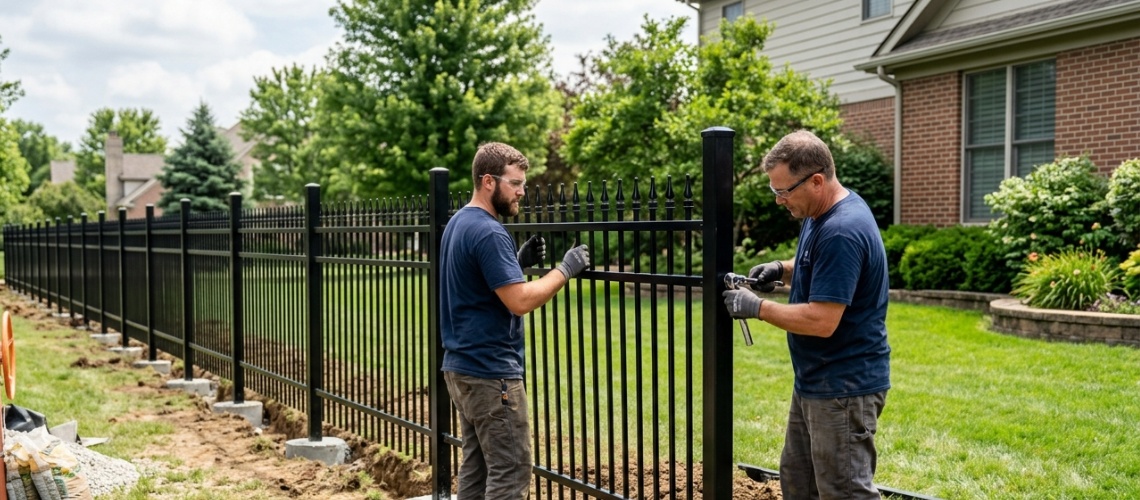
Fence supply and installation costs vary based on the material selected, linear footage, terrain, post depth requirements, gate additions, and site accessibility. Sloped or rocky lots, common throughout Litchfield County, can add labor time regardless of which material is chosen.
Rather than estimating a project based on a national average or generic online calculator, the most reliable way to determine the cost for a specific property is through an on-site evaluation. A professional fencing contractor such as Connecticut Fence & Gate can provide a personalized estimate based on the property's terrain, material preferences, accessibility, and overall project scope.
When Should You Call a Professional Fence Contractor?
Call a professional when the project involves:
- A sloped, uneven, or rocky property
- A long fence line that requires consistent grading and alignment
- A gate wider than four feet
- Uncertainty about the property line
- Installation near wetlands, easements, or underground utilities
- A fence that must comply with swimming pool barrier requirements
- Heavy aluminum or composite panels that require specialized equipment
A qualified fence contractor should evaluate the property, explain the tradeoffs among materials, and provide a written scope covering post depth, footing methods, hardware specifications, site preparation, and warranty terms. A material recommendation made without examining the terrain, soil, drainage, and exposure may not account for the property's actual installation requirements.
Frequently Asked Questions
Do I need HOA approval?
Yes. If your property is part of an HOA, check their bylaws for specific restrictions on height, material, color, and design. Always obtain written approval before starting to avoid mandatory removal.
Does homeowners insurance cover fence damage?
It depends on your policy. While many cover damage from storms or falling trees, they rarely cover maintenance-related issues like rot or leaning. Review your policy's "other structures" coverage and verify your deductible before filing a claim.
Can I install a fence in winter?
It is possible, but difficult. Frozen ground complicates digging, and cold temperatures can affect concrete curing. Discuss urgency with your contractor, as they may require specialized equipment to handle frozen soil.
Will a privacy fence keep out deer?
Not necessarily. Most 6-foot privacy fences are too short to deter deer, and small animals can dig underneath. If pest control is your goal, discuss specialized solutions like wire mesh "aprons" or taller perimeter options during your site evaluation.
How can I get privacy without closing off my yard?
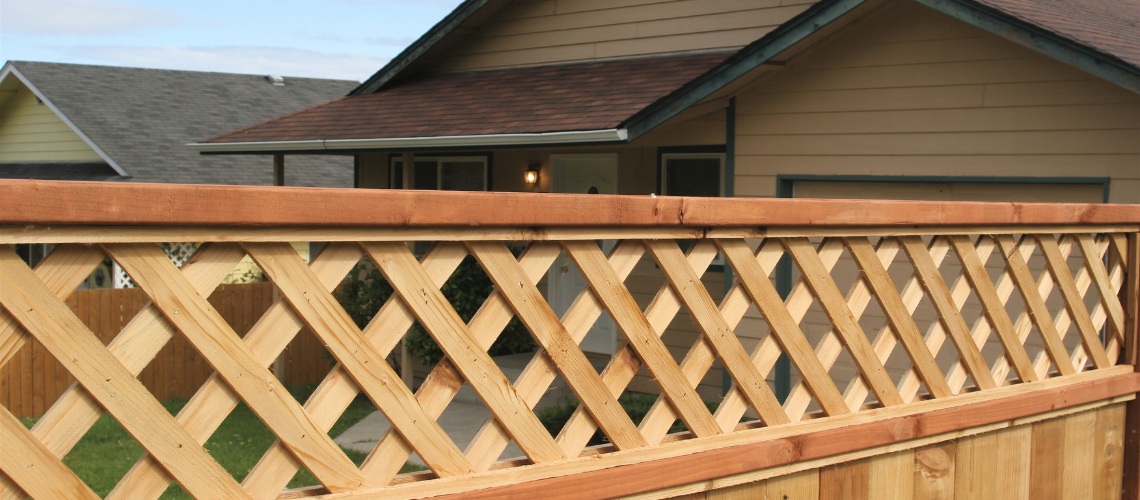
Consider "semi-privacy" designs like shadowbox fencing or lattice-topped panels. These styles break up the solid surface, allowing airflow and light to pass through while still obstructing direct sightlines from neighbors.
Ready to Choose the Right Fence Material for Your Connecticut Property?
Connecticut Fence & Gate has installed wood, vinyl, aluminum, chain-link, and composite fencing across Litchfield County for more than 20 years. The company works directly with homeowners to match materials and installation specifications to each property's conditions and project requirements.
If a fence project is on your list for this year, a proper site assessment is the best starting point before selecting materials.