
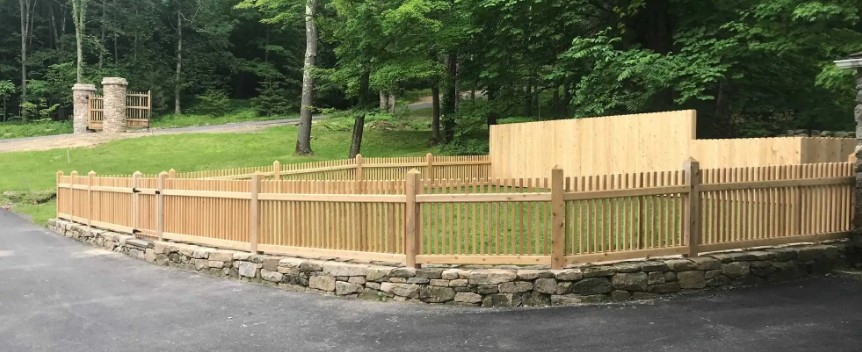
Mixed-material fences blend two or three materials, most often wood, metal, and composite, into one intentional design. The goal is simple: a custom look with better performance.
Metal frames (steel or aluminum) add rigidity so panels and gates are less likely to sag, while wood or composite infill delivers privacy and style.
When done well, this approach reduces maintenance and helps prevent common failures, such as rot near the ground. Done poorly, it breaks down at the connections, where moisture and material movement put the most stress.
What We'll Cover
Mixed-Material Fences: Quick Checklist
- Let metal do the structural work. Use frames/posts to keep panels and gates square.
- Detail joints for water and movement. Failures start where moisture sits and materials shift.
- Match materials to exposure. Sun, shade, sprinklers, salt, and drainage should drive choices.
- Prioritize gate engineering. Bigger gates need metal frames and properly sized hardware.
- Vet the installer's specifics. They should clearly explain footings, fastening, and corrosion protection.
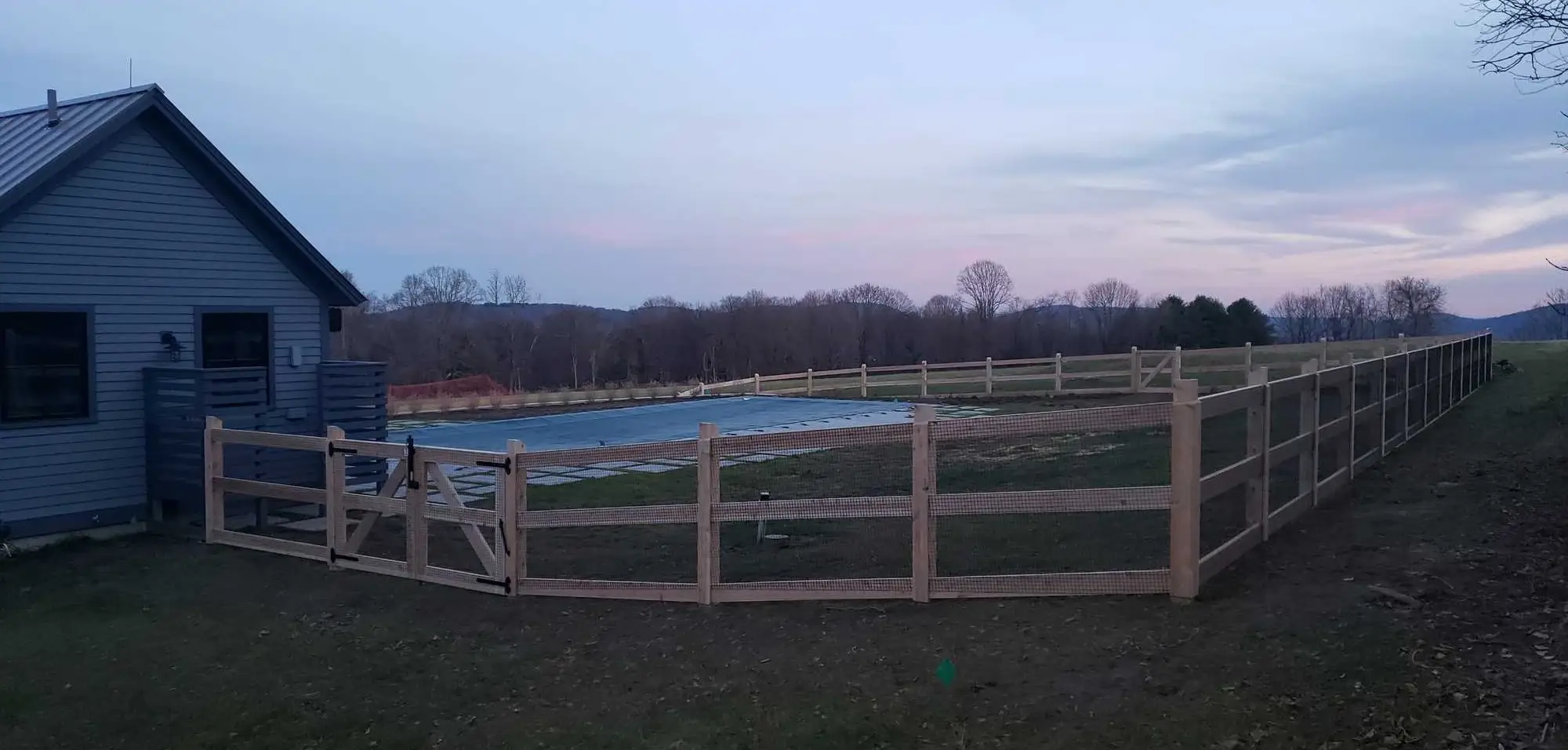
Why Mixed-Material Fences Work
A fence fails where forces concentrate: at posts, rails, gate hinges, and fasteners. Metal framing helps because it's stiff and consistent. Wood is strong, but it moves with moisture. Composite can be stable and low-maintenance, but it expands and contracts with temperature.
A mixed system can be engineered so each material does what it does best:
- Metal carries structural loads and resists sagging.
- Wood provides a warm, traditional appearance and is easy to customize.
- Composite offers a uniform look and reduced finishing needs, especially for privacy infill.
Start With the Two Biggest Enemies: Moisture and Movement
Wood decay is not random. It's moisture-driven. Wood is most vulnerable when it stays wet, especially near ground contact and at joints where water sits.
Movement is the other issue. Wood swells and shrinks as it gains and loses bound water below the fiber saturation point, which is why tight joints in summer can open up in winter, and vice versa.
In mixed-material fences, movement mismatches show up at:
- Screw lines (fasteners loosen)
- Ends of infill boards (gaps change)
- Frame-to-panel interfaces (rattle or binding)
- Gate corners (sag and latch misalignment)
6 Common Mixed-Material Layouts That Look Intentional
1. Metal Frame With Wood Infill
A steel or aluminum perimeter frame acts like a rigid picture frame around the panel. Inside that frame, wood boards become the “infill”. The frame carries the structural load, while the wood provides the finished look and can be swapped out later if a board gets damaged.
Why It Looks Intentional
- Clean borders and consistent lines
- Works well with horizontal or vertical board patterns
- Makes the fence read architectural instead of builder grade
Best Use Cases
- Privacy fences where sagging is a concern
- Gates, especially wider walk gates or double gates
- Long straight runs where small warping would be obvious
Key Detail To Get Right
Don't trap board ends in a water-holding channel. Use drainage gaps or open-bottom details so moisture cannot sit at the connections.
2. Metal Frame With Composite Infill
This layout uses a metal frame for stiffness with composite boards as the privacy surface. Think of it as a rigid structure that keeps everything square, paired with infill that stays visually consistent and does not need staining or painting.
Why It Looks Intentional
- Uniform board texture and spacing
- Minimal visible hardware when designed well
- Pairs naturally with modern homes
Best Use Cases
- Homeowners who want a clean, privacy fence with reduced ongoing finishing
- Backyards with heavy sun exposure where consistent color matters
Key Detail To Get Right
Plan for composite expansion and contraction. That means proper gapping and attachment methods so boards can move without bowing or stressing fasteners.
3. Metal Posts With Wood Rails and Pickets
Here, steel or aluminum posts replace wood posts, while the fence surface stays traditional with wood rails and pickets. The idea is simple: eliminate the most common weak point (posts near grade) while keeping the familiar wood-fence look.
Why It Looks Intentional
- Looks like a classic wood fence at first glance
- Posts can be simplified or wrapped to match the design
- Strong vertical lines give it a built-to-last feel
Best Use Cases
- Homeowners who like wood aesthetics but want fewer post issues
- Front-yard styles like spaced pickets or semi-privacy layouts
- Areas where ground-level moisture tends to shorten post-life
Key Detail To Get Right
Use hardware and fasteners rated for exterior exposure and compatible with treated wood, so corrosion doesn't become the weak link.
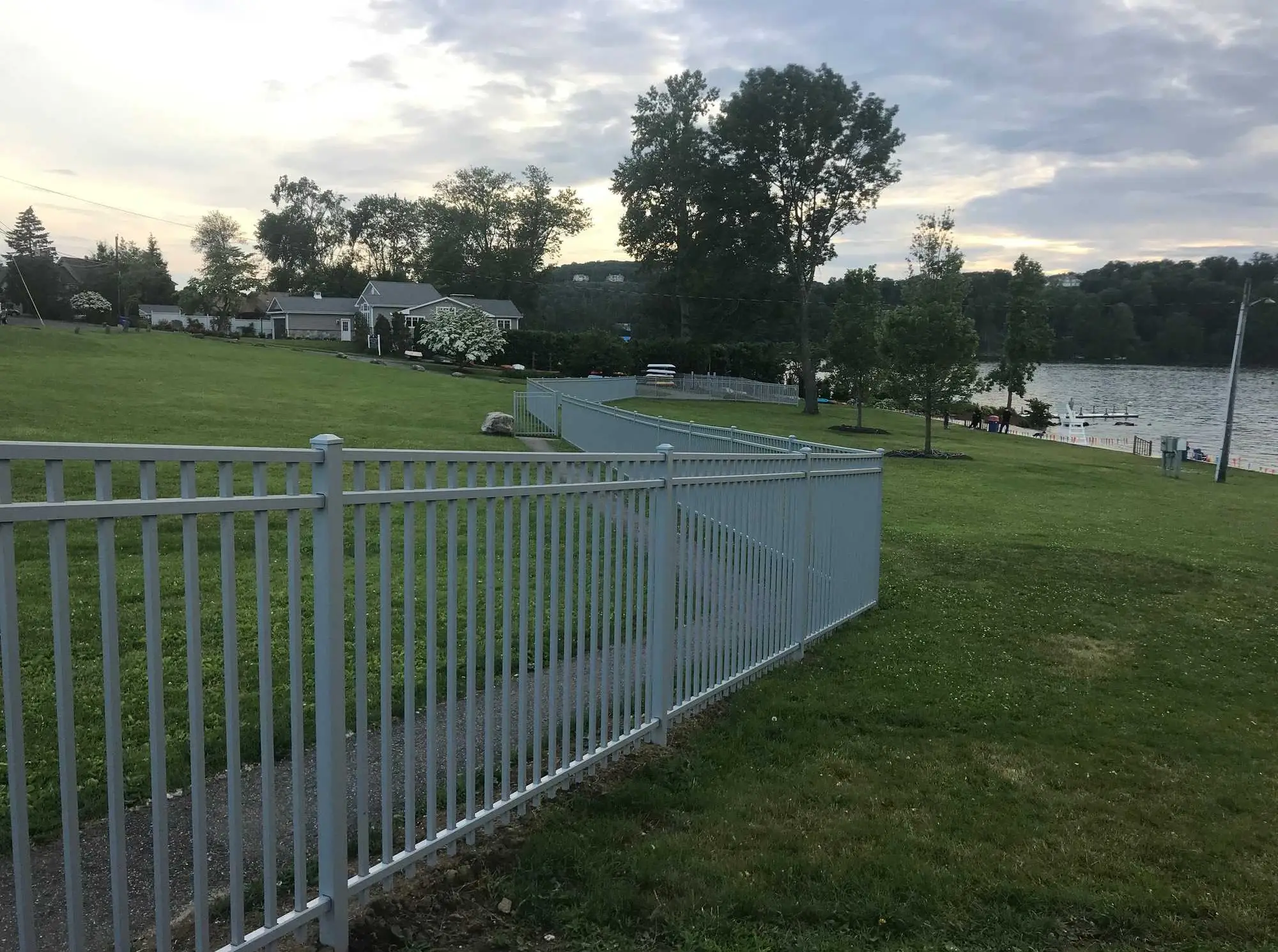
4. Wood Panels With Metal Accent Sections
This is primarily a wood fence, but you add repeatable metal elements in a controlled way: a top band, framed “window,” decorative insert, or a section of metal infill to break up the run.
Why It Looks Intentional
- Creates a custom look without mixing materials everywhere
- Adds contrast and breaks up long fence runs
- Can match other exterior metals like railings or light fixtures
Best Use Cases
- Long property lines that need visual relief
- Backyards where you want privacy but not a solid wall effect
- Modern farmhouse and transitional home styles
Key Detail To Get Right
Make the metal accents repeat consistently. One random panel tends to look accidental. A pattern looks designed.
5. Horizontal Wood With Metal Posts
This is a modern system where slim metal posts provide structure and alignment, while horizontal wood boards create a clean, contemporary face. The metal helps keep long horizontal lines straighter.
Why It Looks Intentional
- Strong horizontal lines fit modern architecture
- Metal posts keep runs straighter over time
- Minimalist hardware can be hidden
Best Use Cases
- Contemporary homes
- Yards where you want a crisp, linear style
- Applications where straightness and alignment matter
Key Detail To Get Right
Horizontal boards show imperfections more. Your post alignment and board spacing must be consistent, or the fence will look wavy from a distance.
6. Mixed Material Base and Infill Designs
This design uses a more durable lower section (often metal framing or composite) where splash, mulch, and trapped moisture do the most damage. Above that, wood infill provides warmth and a natural look, where it stays drier.
Why It Looks Intentional
- Reads like a deliberate two-tone or two-texture design
- The high-risk moisture zone gets the more durable material
- Helps reduce rot issues near the grade
Best Use Cases
- Lots with heavy mulch, irrigation, or poor drainage
- Privacy fences where the bottom edge is most likely to fail
- Homeowners who want wood but want fewer ground-contact problems
Key Detail To Get Right
Transitions must be clean: consistent reveals, straight lines, and no exposed edges that collect water.
A Quick Planning Checklist Before You Choose a Design
Use this to avoid common mistakes:
- What is the primary goal: privacy, security, style, or low maintenance?
- What is your exposure: full sun, shaded damp areas, coastal air, road salt?
- Do you need a high-use gate (kids, pets, frequent driveway access)?
- Are you mixing metals anywhere (aluminum with steel, for example)?
- How will water drain from channels and horizontal rails?
- Are you designing for movement (wood moisture changes, composite thermal changes)?
- Are footings designed for local frost and soil conditions?
What To Look for in a Fencing Contractor
Experience With Mixed-Material Builds
Not every installer is comfortable combining wood, metal, and composite in one system. Mixed-material fences require more than standard panel installation because connection points and movement differences matter.
Look for a contractor who can explain:
- How metal framing prevents sagging
- How wood or composite boards will be attached without trapping moisture
- What design choices reduce long-term maintenance
Strong Understanding of Structural Support
A fence is only as strong as its posts, footings, and gate framing. Mixed-material designs can be heavier and place more stress on hinge points.
A qualified contractor should evaluate:
- Proper post spacing for the chosen materials
- Footing depth based on local frost conditions
- Reinforcement needs for wide or tall gates
Knowledge of Moisture and Drainage Details
Most fence failures start where water sits: near grade, inside channels, or at board ends. A good contractor designs to keep materials dry and ventilated.
Ask how they handle:
- Ground clearance at the bottom of panels
- Drainage in framed systems
- Protection for wood ends and cut surfaces
Proper Hardware and Corrosion Planning
When wood meets metal, fasteners become critical. Outdoor exposure, treated lumber, and mixed metals can accelerate corrosion if the wrong hardware is used.
A reliable contractor will specify:
- Exterior-rated fasteners
- Compatible metal combinations
- Protective coatings for steel or aluminum components
Clear Design and Installation Standards
Mixed-material fences should look intentional, not improvised. That requires consistent spacing, straight lines, and clean transitions between materials.
Look for contractors who provide:
- Detailed layout planning before installation
- Consistent panel alignment
- Custom gate construction when needed
Transparent Communication and Local Familiarity
Fence requirements vary by town, property line rules, and soil conditions. A contractor with local experience can help avoid setbacks, drainage issues, and frost-related movement.
A strong contractor will:
- Walk the site before quoting
- Discuss material trade-offs clearly
- Offer solutions based on Litchfield County conditions, not generic templates
Frequently Asked Questions (FAQs)
Can a mixed-material fence be installed on an existing fence line or old posts?
Sometimes, but it's usually only a good idea if the existing posts are verified plumb, structurally sound, and properly set. Many homeowners get better results replacing posts so the new system starts square and aligned.
Will a mixed-material fence increase home value?
It can improve curb appeal and perceived quality when the design looks intentional and the fence performs well (straight lines, solid gates, clean finishes). Value impact varies by neighborhood and buyer preferences, so treat it as a quality and longevity upgrade first.
Is it safe to combine aluminum parts with steel parts outdoors?
It can be, but the connection details matter. Dissimilar metals in wet contact can corrode faster. A good installer isolates metals, chooses compatible fasteners, and uses coatings to reduce corrosion risk.
Are mixed-material fences worth it?
They can be worth it if you want a custom look and fewer structural issues like sagging gates or leaning panels. The value comes from using metal for structure and designing joints to handle water and movement.
Are mixed-material fences more expensive than wood fences?
Usually, yes, upfront. Metal framing and upgraded hardware raise costs, but the trade-off is often fewer repairs and a longer time between major maintenance compared to a basic wood system. Contact trusted contractors like Connecticut Fence & Gate to get accurate estimates.
Ready To Build a Mixed-Material Fence That Holds Up?
If you're considering a custom mixed-material design for your Connecticut property, working with an experienced contractor matters. Connecticut Fence & Gate can help you choose the right material combination, layout, and installation approach so your fence looks intentional, performs well, and fits your home's style.
To explore options or request a quote, contact Connecticut Fence & Gate today.